
Laro ng Lahi Team Building
Give your people a team building they’ll still talk about on Monday.
Laro ng Lahi Team Building brings large groups together through high-energy Filipino games, laughter, cheering, and shared wins.
It feels like play.
But what people remember is the connection.
Why Teams Remember Laro ng Lahi
Built for large groups. Designed to be remembered.
High-energy play
People move, cheer, laugh, and compete from the start.
Proudly Filipino
The experience feels familiar, joyful, and close to home.
Everyone gets involved
Not just the athletic few. Everyone can play, support, guide, and celebrate.
Shared wins
Teams leave with stories, moments, and a stronger sense of connection.
A Team Building Experience People Can Feel
Most team buildings are explained too much.
Laro ng Lahi is different.
Your people will understand it the moment they hear the drumbeat, see their team color, and hear the first cheer from across the field.
They know this feeling.
The noise.
The laughter.
The friendly pressure.
The teammate shouting, “Kaya mo ’yan!”
The quiet person suddenly becoming the team’s surprise hero.
That is what makes Laro ng Lahi powerful.
It brings back the Filipino joy of playing together — then turns that joy into connection, trust, and shared energy your team can carry back to work.
They don’t just attend.
They join. They move. They cheer. They remember.
What the Experience Can Look Like
Laro ng Lahi begins with competition.
Teams get their colors. They create their chants. They look across the field and see the other groups as rivals.
That is part of the fun.
But as the experience unfolds, something important begins to appear: no team wins alone forever. At some point, people realize that speed is not enough. Strength is not enough. Noise is not enough.
They need timing. They need trust. They need support. They need kapit-bisig.
1. Gather and Energize
The experience starts with color, noise, and movement. People arrive as employees, staff, officers, teachers, or teammates. Soon, they become teams with names, colors, chants, and a reason to cheer.
The quiet ones smile. The playful ones come alive. The competitive ones start looking around.
The day has begun.
2. Play and Compete
Then the games begin.
Teams move through Filipino-inspired challenges designed for large groups. Some games are fast. Some require planning. Some need balance, timing, or trust.
People laugh because the games feel familiar. They focus because the challenge is real. They cheer because every point matters.
At first, everyone wants their own team to win.
3. Discover Kapit-Bisig
Then the bigger lesson begins.
Participants start to notice that the best moments happen when people stop thinking only of themselves. Someone slows down so a teammate can catch up. One group shares a strategy. A strong player makes space for someone less confident. A team learns that cheering can carry a person farther than pressure.
The game still feels competitive.
But underneath the competition, people begin to see the truth: as one organization, they must learn to move together.
That is kapit-bisig — not just standing side by side, but choosing to carry the challenge together.
4. Celebrate as One
The experience ends with shared wins, team recognition, and a closing moment that brings everyone back to the bigger lesson.
People leave tired, smiling, and full of stories.
They remember the cheer.
They remember the comeback.
They remember who stepped up.
They remember who helped.
And more than the score, they remember how it felt when the group became one. That is the point.
Not just to win the game. But to help people feel what it means to win together.
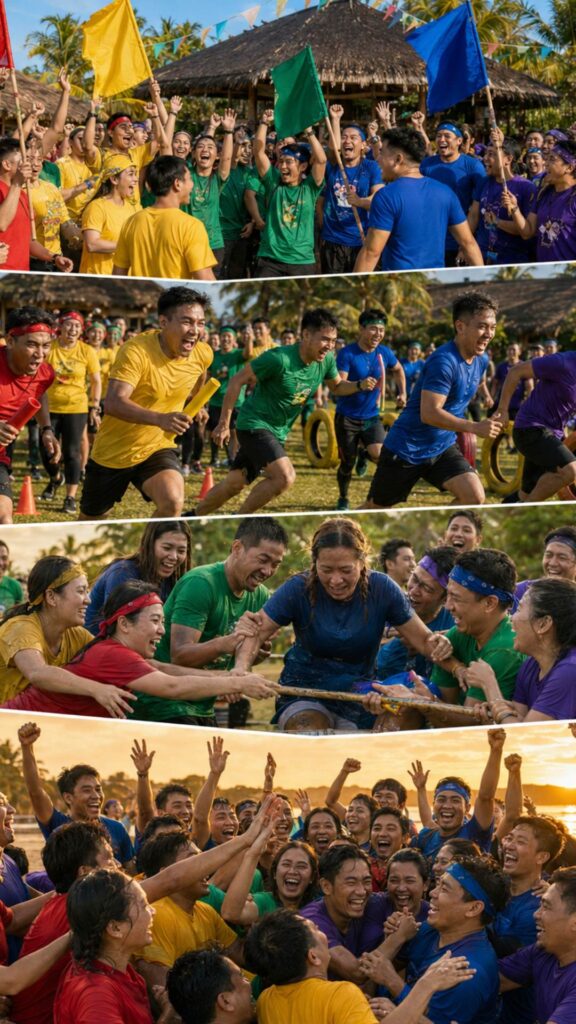
More Than Games
The games are fun. But the real magic is what they reveal.
You see it when one team member slows down so another can catch up. That is malasakit.
You see it when a group loses the first round, gathers quickly, changes the plan, and comes back stronger. That is diskarte.
You see it when the quiet person suddenly becomes the one everyone listens to because she saw what the team missed. That is pakikipagkapwa — making room for each person to matter.
You see it when someone says, “Ako na,” not because they were assigned, but because the team needs them. That is pananagutan.
And you see it when the whole group stops thinking, “How do I win?” and starts asking, “How do we win together?” That is bayanihan.
Laro ng Lahi works because it does not teach values like a lecture. It lets people experience them.
They feel the pressure.
They hear the cheers.
They adjust.
They help.
They try again.
By the end, the team has more than photos. They have shared stories. They have inside jokes. They have moments they can point to and say, “That was us.”
The games create energy. The shared experience creates culture.
Built for Large Groups
Large-group team building can easily become messy.
Too many people.
Too much waiting.
Too many spectators.
Too few real moments.
Laro ng Lahi is designed differently.
The experience uses fast rounds, team stations, clear roles, big-group cheering, and simple rules people can understand quickly. Participants are not left standing around, waiting for their turn. They are playing, guiding, scoring, cheering, planning, and helping their team win.
That is why the energy stays high.
Everyone may not play the same role at the same time, but everyone has a way to take part.
Some compete.
Some cheer.
Some lead.
Some strategize.
Some support.
Some become the surprise hero.
When the whole group has a role, the whole group remembers the day.
Designed Around Your Group
No two groups play the same way.
Some teams are loud from the start. Some need time to warm up. Some groups are young and highly active. Others include mixed ages, different departments, senior leaders, introverts, frontliners, and people who don’t usually join games.
That is why we don’t run Laro ng Lahi as a fixed template.
We design the flow around your group.
We look at your number of participants, venue, available time, audience profile, and event goals. Then we choose the right mix of challenges, team formats, facilitation style, and reflection moments.
It can be done outdoors, in covered courts, resorts, open grounds, large halls, or selected indoor venues. It can include dry games, water-based challenges, or a mix of both when the venue allows it.
Our goal is to give your people a high-energy Filipino team building experience that feels safe, inclusive, well-facilitated, and unforgettable.
Your group brings the people. We design the play that brings them together.
Choose the Format That Fits Your Event
Laro ng Lahi can be designed as a short burst of energy or as the main event of the day.
It depends on your people, your venue, your schedule, and what you want them to experience.
Half-Day Experience
Best when you want a focused, high-energy team building program.
Your people get the fun, movement, team challenges, and closing reflection without taking the whole day. This works well for company outings, employee engagement days, school programs, and events with a tight schedule.
Full-Day Experience
Best when you want a richer and more complete team experience.
There is more time for team identity, more rounds, more shared stories, and deeper moments of kapit-bisig. This is ideal when the event is meant to strengthen connection, celebrate the organization, or mark an important season.
Large-Group Festival Format
Best for very large gatherings.
This format turns the experience into a lively Filipino team festival, with multiple stations, bigger cheers, more movement, and stronger crowd energy. It works well for company-wide events, agency gatherings, conventions, family days, and venue-based programs.
Custom Laro ng Lahi Experience
Best when you have a specific theme, value, audience, or event goal.
We can shape the flow around what matters most to your organization — whether that is collaboration, malasakit, unity, service, resilience, or simply giving your people a day they will truly enjoy.
You do not need to know the exact format yet.
Tell us about your group, and we’ll help you choose the version that fits.
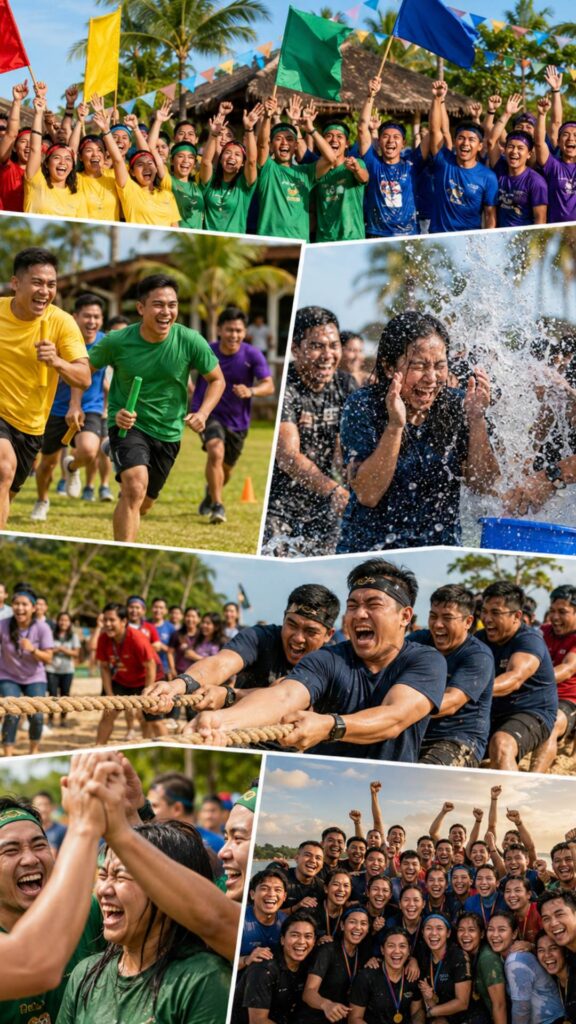
See the Energy
Before people ask about the mechanics, they usually feel the energy first.
The colors.
The movement.
The cheering.
The laughter.
The splash.
The comeback.
The moment one person runs back to the team and everyone erupts.
That is what Laro ng Lahi looks like.
It is not quiet.
It is not stiff.
It is not the kind of event where people sit back and wait for something interesting to happen.
It moves.
And when it moves, people move with it.
One team starts cheering. Then another answers. One player makes a surprising play. Then the whole group leans in. A simple moment becomes a shared memory.
That is the energy you want your people to feel.
Not forced fun.
Not polite applause.
But real participation.
Real cheering.
Real kapit-bisig.
Use the photos in this section to show exactly that:
the motion
the laughter
the water
the cheering
the teamwork
the joy of people fully in it
Because once people see the energy, they understand the experience.
This is not just something they will attend.
It is something they will enter, enjoy, and remember.
Bring Laro ng Lahi to Your Team
Give your people a team building experience that feels alive from the first cheer to the final photo.
Tell us about your group, your venue, your date, and what you want your people to experience. We’ll help you design a Laro ng Lahi flow that fits your event and brings your people together.
This can be high-energy.
This can be meaningful.
This can be proudly Filipino.
And most of all, this can be the kind of team building your people will still talk about on Monday.